
Engineering Question
When Are Chilled Water Systems Used?
Chilled water systems are typically used in larger commercial, education, institutional, and specialized facilities where centralized cooling capacity and flexible air-side design matter.

Reviewed by
Michael K. Frempong, PE, LEED AP
President & Principal Engineer, BEED Engineering
Michael K. Frempong is a professional engineer and LEED AP accredited professional with over 20 years of experience in consulting engineering. As President & Principal Engineer at BEED Engineering, he leads the firm’s MEP design and consulting work for laboratory, healthcare, industrial, data center, education, commercial, municipal, and other building projects throughout Florida.
View BEED team profileQuick Answer
Chilled water systems are commonly used in larger commercial buildings, schools, campuses, healthcare and institutional facilities, and other projects that need centralized cooling capacity. A chiller plant produces cold water that is pumped to multiple air-handling or fan-coil units. That arrangement suits buildings with many zones, long distribution runs, redundancy needs, or a central energy plant serving more than one building.
On this page
Where chilled water fits
A chilled water system cools water at a central plant and distributes it to coils that cool and dehumidify building air. It is an HVAC engineering approach used when one plant can serve many air-side units better than a collection of independent direct-expansion systems.
It is not the default for every commercial building. Packaged rooftop units and split systems remain appropriate for many smaller projects.
Larger commercial buildings
Office, civic, and mixed-use buildings often move to chilled water when:
- Multiple air handlers need a shared cooling source
- Redundant capacity is desired
- Long duct or pipe runs favor hydronic distribution
- Centralized maintenance is preferred over many rooftop machines
Schools and campuses
Education projects frequently use chilled water for classroom wings, commons, and specialty spaces served from a central plant. Campus loops can serve more than one building from shared chillers and pumps.
BEED’s education and plant work includes Meadowlane Intermediate School in West Melbourne, Lake Nona Middle School in Orlando, and Oviedo High School renovations.
Institutional and specialized facilities
Institutional, municipal, and specialty facilities may use chilled water when loads are large, continuous, or operationally critical. Examples include training and reserve facilities, laboratories, and other buildings that need stable central capacity. The West Palm Beach Reserve Center is one documented plant-related project in BEED’s archive.
Healthcare and diagnostic buildings also use chilled water when the facility size and air-side layout justify a plant, though smaller clinics often remain on packaged or split systems.
Central plants
A central energy plant is the clearest chilled-water use case: chillers, pumps, heat rejection, and controls located together, with chilled water distributed to one or more buildings. Plant design includes air-cooled or water-cooled heat rejection, pumping strategy, and control sequences.
Conditions that usually push toward chilled water
- High total cooling load across many zones
- Preference for centralized equipment rooms or yards
- Need for staged redundancy
- Future expansion on a shared loop
- Air-side designs that need flexible coil and outdoor-air arrangements
When another system may fit better
Chilled water may not be the right fit when the building is small, plant space is unavailable, first cost must stay minimal, or the renovation cannot support new hydronic infrastructure. In those cases, packaged DX, splits, or VRF systems are often evaluated instead.
When to involve an engineer
Involve an engineer early when comparing plant versus packaged options, expanding an existing loop, replacing chillers, or planning a campus central plant. Load, water temperatures, pumping energy, and controls have to be designed together.
Related BEED projects
All projects →Selected work that shows how BEED has applied this kind of engineering on real buildings.
BEED Engineering
Education
Oviedo High School
Oviedo, Florida · Mechanical + Plumbing Engineering
Education
Oviedo High School
Campus Renovations
Oviedo, Florida
400,000 SF
Mechanical + Plumbing Engineering
Mechanical and plumbing engineering and project administration for 400,000 square feet of high school renovations in Oviedo, Florida, including a water-cooled central chiller plant.
View Project →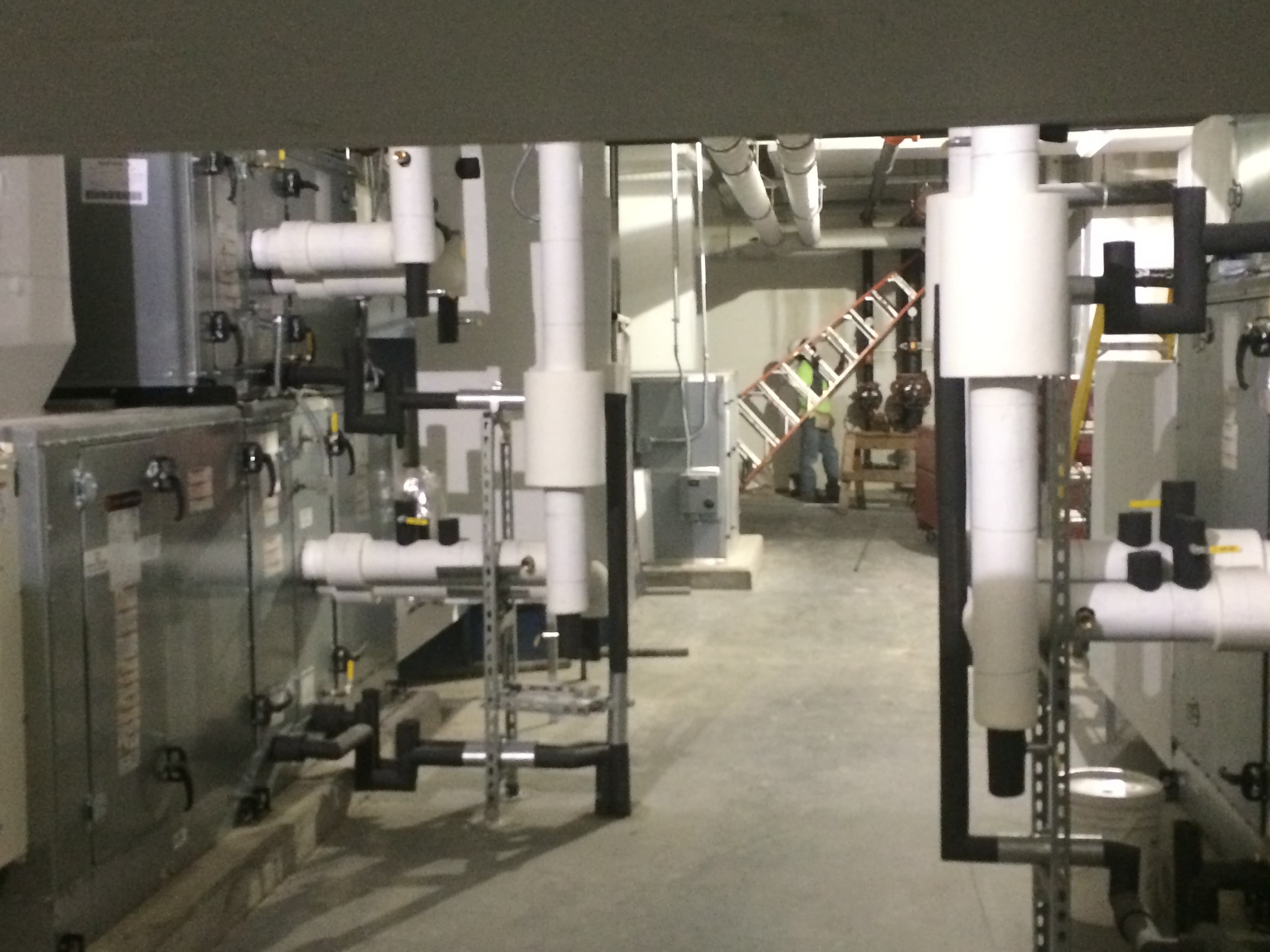
Education
Meadowlane Intermediate School
Central Energy Plant
West Melbourne, Florida
116,700 SF
Mechanical + Plumbing Engineering
Mechanical and plumbing engineering and project administration for a 116,700-square-foot school and water-cooled central energy plant in West Melbourne, Florida.
View Project →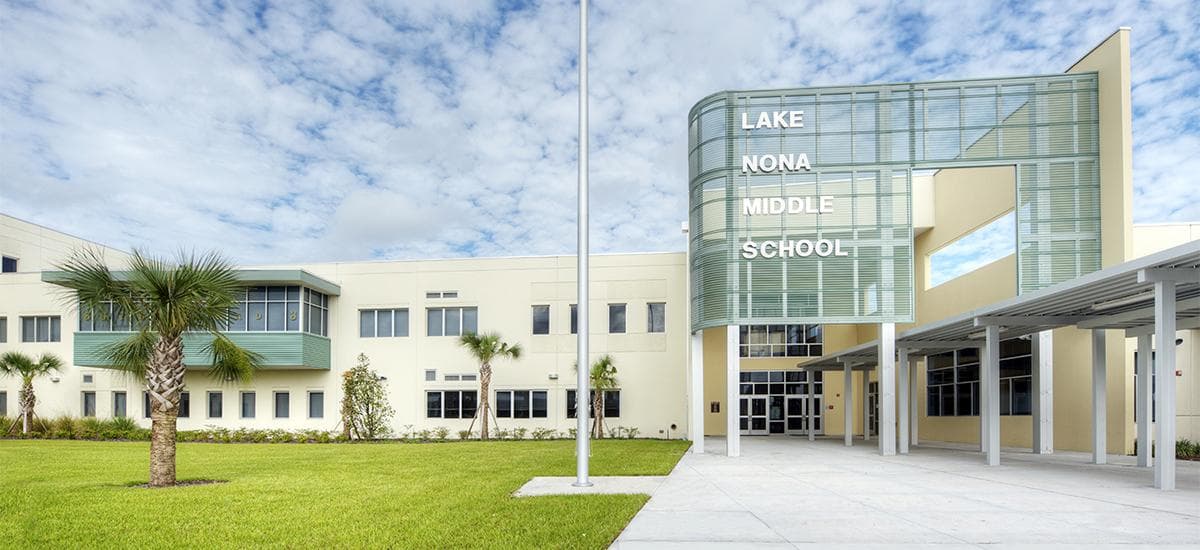
Education
Lake Nona Middle School
Orlando
Orlando, Florida
112,000 SF
Mechanical + Plumbing Engineering
Mechanical and plumbing engineering and project administration for a 112,000-square-foot middle school in Lake Nona, Orlando, Florida, including ice storage and hurricane-shelter ventilation.
View Project →Common Questions
Are chilled water systems only for huge buildings?
They are most common on larger or multi-building projects, but mid-size institutional and specialty facilities also use them when central capacity or redundancy is needed.
Can a school use chilled water instead of rooftop units?
Yes. Many education projects use central chilled water plants serving air handlers for classrooms, commons, and specialty spaces.
Do all hospitals use chilled water?
Many larger healthcare facilities do, but system selection depends on building size, existing infrastructure, and project requirements—not occupancy label alone.
When is DX or packaged equipment a better fit?
Smaller buildings, simple zones, or renovations with limited plant space often stay on packaged or split systems when a central plant is not justified.
Filed under Mechanical Engineering
Continue exploring
Related Questions
What Is a Chilled Water System?
A chilled water system uses a chiller to cool water that is pumped to air-handling units and other coils, then returned to the plant to be cooled again.
How Does a Chilled Water System Work?
Chilled water absorbs heat at building coils, returns to the chiller, rejects that heat at a cooling tower or air-cooled condenser, and is pumped back out as cold supply water.
Air-Cooled vs. Water-Cooled Chillers
Air-cooled chillers reject heat to outdoor air at the unit; water-cooled chillers reject heat through condenser water and a cooling tower. Each fits different site and plant conditions.
What Is HVAC Engineering?
HVAC engineering is the design of heating, ventilating, and air-conditioning systems that control temperature, humidity, ventilation, and indoor air quality.
Commercial HVAC Design: A Guide for Building Owners
A practical owner’s guide to commercial HVAC design decisions, from system type and humidity control to controls, maintenance access, and when to hire an engineer.
How Do You Control Humidity in a Commercial Building?
Commercial humidity control depends on dehumidification at the cooling coil, proper outdoor-air treatment, runtime, and controls—not just a lower thermostat setpoint.
Related BEED Services
Service
Chilled Water Systems
Chiller plants, pumping, air-handling equipment, and controls for larger commercial and institutional facilities.
Service
Central Plant Engineering
Central heating and cooling plants, thermal distribution, and plant optimization for campuses and large buildings.
Service
HVAC Engineering
Heating, ventilating, and air-conditioning design for occupant comfort, indoor air quality, and energy performance.
Service
Mechanical Engineering
HVAC, chilled water, central plants, ventilation, humidity control, and building automation for commercial and institutional buildings.
Related Locations
Local Presence
BEED Engineering — Based in Palm Bay, Serving Florida
BEED Engineering is a Palm Bay-based MEP firm providing mechanical, electrical, and plumbing design for commercial and specialized facilities throughout Central Florida and Florida. BEED Engineering is a firm you can trust to get the job done.
Need Engineering Help?
Discuss Your Project
BEED Engineering designs chilled water and central plant systems for education, institutional, and commercial buildings throughout Central Florida.